January 31, 2025
‘Education was my lifeline as a Somali refugee, so I’m passionate about increasing support for Zamzam’s education projects’
Tahir Tahir, who chairs Zamzam UK’s board of trustees, was looking forward to following in his father’s footsteps as an academic when he graduated from Somalia National University in December 1990. But just a few days after his graduation Somalia erupted into civil war, and within months he was fleeing the country as a refugee.
After a perilous journey to Mombasa in a cargo boat crammed with tired and hungry people escaping the conflict, Tahir spent two years living in limbo in Kenyan refugee camps before finding a way to get to the UK in early 1993. It all felt a long way from his home town of Barawa in Lower Shabelle, but the education he received in Somalia helped him to find his feet in the alien urban sprawl of London.
“My education proved to be my lifeline as a Somali refugee in the UK,” he says. “Now I’m passionate about increasing support for Zamzam’s education projects so that more Somalis can get the start in life they deserve.”
Somalia is one of the world’s poorest countries, and three million Somali children are out of school because of poverty, conflict and displacement. Education is vital to break the cycle of poverty – poverty rates among Somalis without any education are double the rates for those who have had a secondary education.
Zamzam’s education programme includes building and running new schools, providing high-quality teaching materials, training teachers, and delivering vocational training to help young people find employment. The organisation has built more than 150 schools since it was founded in 1992. Two of Zamzam’s schools in Mogadishu provide high-quality education in English, and Tahir’s hard work has been pivotal in securing International Baccalaureate (IB) accreditation for them.
“Zamzam’s education work is so important,” he says. “Education is enlightenment. Education is the key to progression for the whole community and vital for future prosperity.”
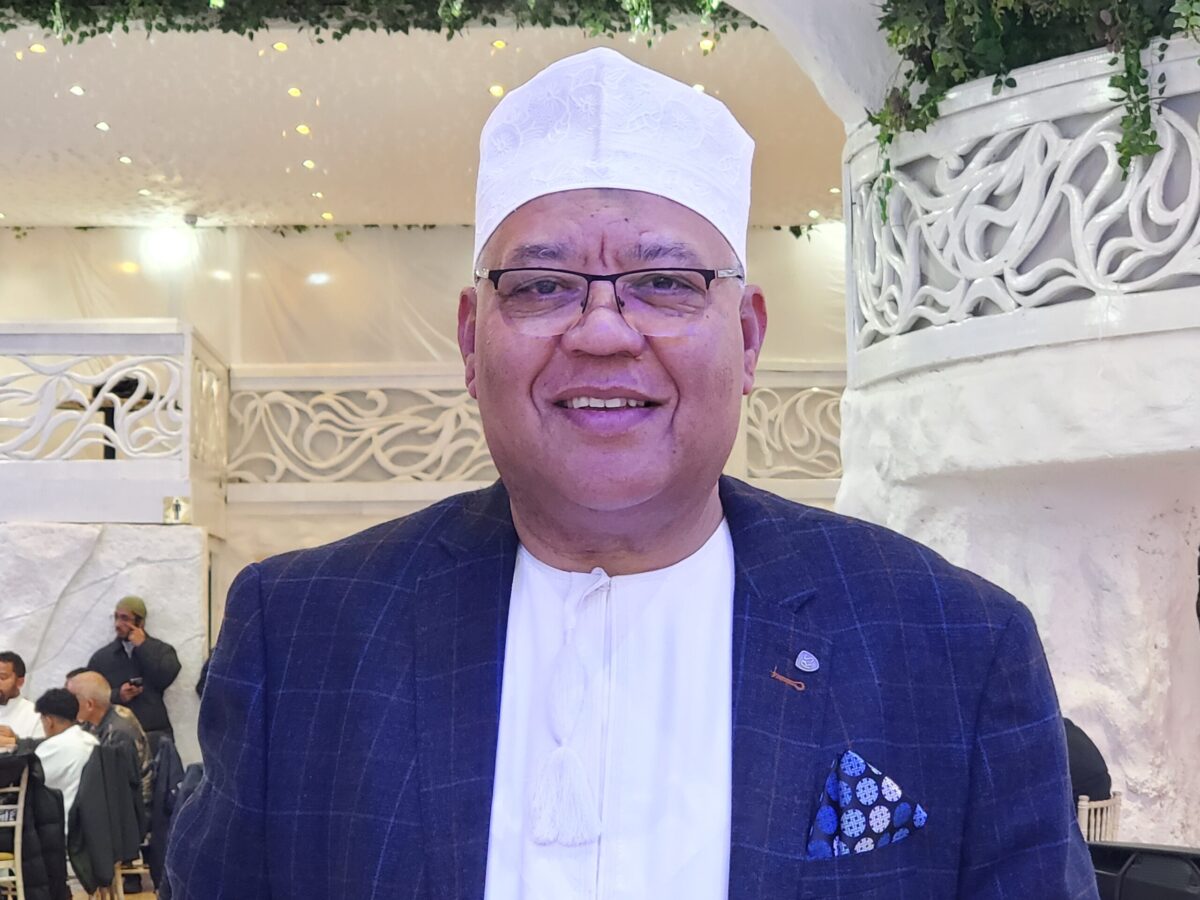
Not long after arriving in London in 1993, Tahir got married to Khadija, a fellow Somali refugee. They have two children – 30-year-old Hyder, who is a Trauma and Orthopaedics Registrar for East Sussex and North Essex NHS Trust, and 15-year-old Aisha who is studying for her GCSEs.
Khadija shares her name with the wife of the Prophet (peace be upon him), and she also shares her namesake’s industrious and enterprising qualities. She was just one year into her medical training in Somalia when she was uprooted from the country by the civil war, and yet she managed eventually to forge a career in healthcare in the UK – she is a medical physicist and Head of Nuclear Medicine at a busy London hospital.
Meanwhile Tahir, now 59, has served in the UK education sector for more than three decades, including over 15 years working for a leading Local Education Authority in East London. He was one of the founders three decades ago of the Somali Bravanese Welfare Association, which is still going strong. Throughout his career, he has sought to improve the prospects of young people from ethnic minorities by providing information, advice and guidance to hard-to-reach communities and by developing multilingual digital resources.
Tahir’s successes as a teacher trainer, public speaker, motivator and mentor for young people in the UK brought him to the attention of Zamzam Foundation back home in Somalia, where one of his cousins was working for the organisation. In 2017 he accepted an invitation to visit Somalia to see Zamzam’s work, and he has been supporting and advising on the Zamzam education programme ever since.
“Travelling out from Nairobi to Mogadishu, my heart was racing because my mind was flashing back to the traumatic days of the civil war,” he says. “The explosions and gunfire in Mogadishu where I was when it first started. The bodies on the streets of Barawa where my family initially fled before the war caught up with us. The lack of food and our fear for the future.”
Tahir is glad that he made that journey home, because it has given him the opportunity to promote the work of Zamzam Foundation internationally and get involved in its education work. He is a board member of Zamzam’s Hilal Academy, where pupils are taught in all subjects in English, with diplomas and other qualifications accredited by International Baccalaureate for the first time in Somalia. A quarter of the pupils registered in IB curriculum schools are orphans supported by Zamzam Foundation’s orphan sponsorship programme.
“Our schools are the only ones providing free school meals because we recognise that children learn better if they are not coming to school hungry,” he says. “More than half of the children in Zamzam schools are girls, who too often miss out on education, and more than 90 per cent of our pupils complete their education. We have achieved a lot, but there is so much more we want to do.
“We have teachers from Yemen and Syria, teachers from Kenya and Uganda, but not enough teachers from Somalia. Through raising standards and improving training I want to make teaching a more attractive career for Somalis graduating from Zamzam University and other local universities. The launch of Zamzam Foundation UK is a great opportunity to get more support for Zamzam’s education programmes.”